In conflict zones across the Horn of Africa, the Sahel, and Central Africa, PeaceTech (defined in this case as the application of digital tools, AI, and big data to conflict mediation and early warning systems) applications are becoming more prominent. However, the digital infrastructure supporting these applications remains overwhelmingly based outside the continent.
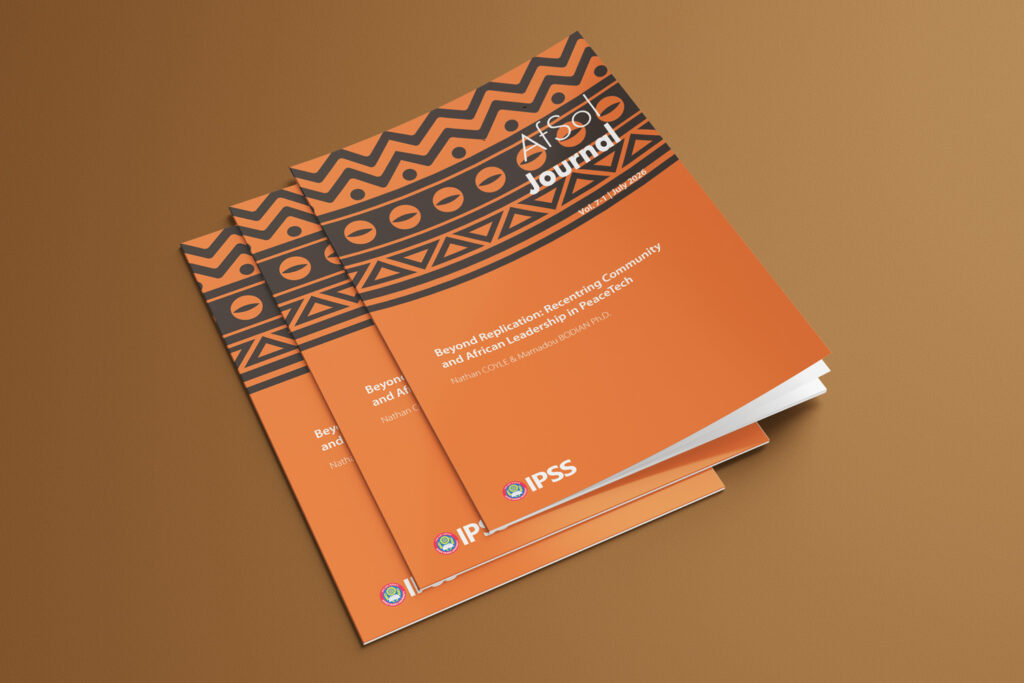
A recent analysis published in the AfSol Journal by the Institute for Peace and Security Studies (IPSS), titled Beyond replication: Recentering community and African leadership in PeaceTech, addresses this challenge. The report argues that current PeaceTech initiatives often replicate historic power imbalances, extracting local data while relying on foreign frameworks to interpret complex, lived realities on the ground.
If digital peacebuilding is to succeed, IPSS asserts that Africa must move beyond merely cloning Western technological models.
The political economy of data imbalance
Technology and data are rarely neutral because they are subject to human interpretation and decision-making, societal biases, and political contexts. When AI models designed to detect conflict trends or analyze social sentiment are trained on biased or externally hosted datasets, they risk misinterpreting nuanced local dynamics. The IPSS report frames this issue as a structural political economy problem, where data is extracted from fragile environments, processed abroad, and then re-imported as prescriptive peacebuilding policy.
This disconnect carries risk and consequences. Plus, when early warning systems rely on metrics foreign to the communities they serve, they erode technical reliability and local legitimacy, which is foundational for effective peacekeeping.
Commentary: Reclaiming data sovereignty
To break this cycle, digital peacebuilding must align with broader regional sovereignty frameworks. Initiatives such as the African Union’s Digital Transformation Strategy (2020–2030) and the AU Data Policy Framework offer a clear blueprint.
Rather than relying on third-party platforms, African institutions and coalitions must build indigenous data infrastructures. PeaceTech tools should be co-designed alongside the local peacebuilders, community mediators, and civil society organizations who understand the immediate context.
Empowering local civil society to control how their data is collected, interpreted, and deployed is not only ethical, but it makes early warning systems far more accurate and effective.
Technology can be a robust amplifier for peace, but only if the communities living through conflict hold the steering wheel. Re-centering African leadership and community-driven design in PeaceTech is the only way to build tools that are legitimate, trustworthy, and capable of fostering lasting stability.
Read the full report
For a deeper dive into the report’s methodology, critical data studies, and actionable policy recommendations, read the full paper:
Beyond replication: Recentring community and African leadership in PeaceTech